
Subtotal
$0.00
A Life Shaped by Movement, Memory, and Artistic Devotion
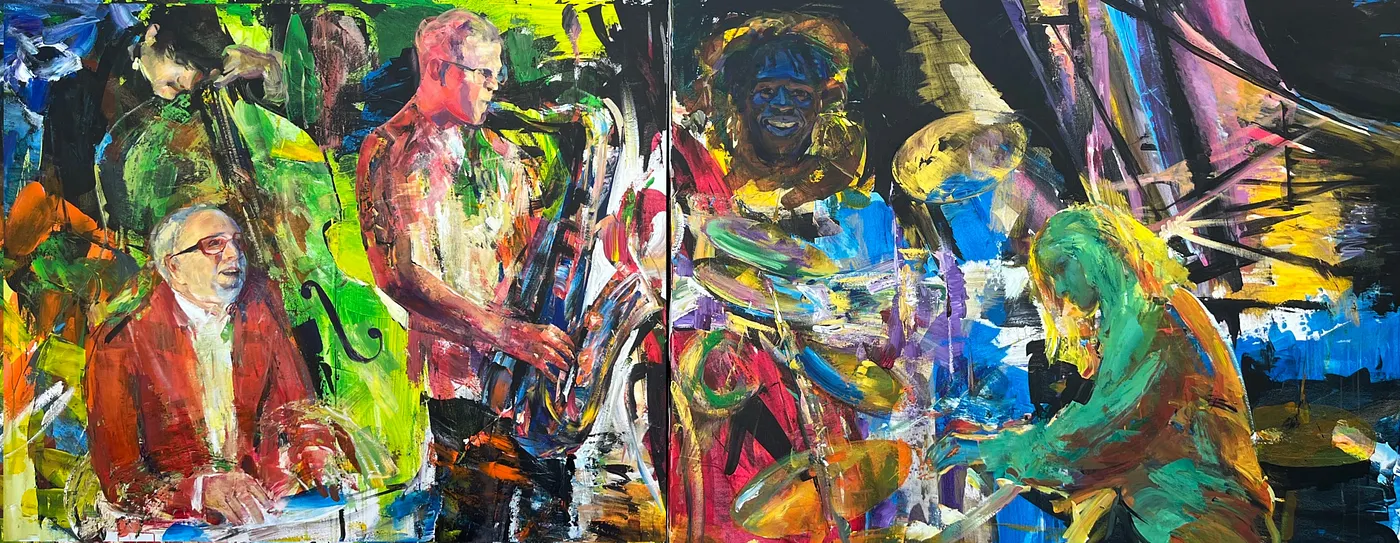
Natalia Aandewiel is a Ukrainian-born visual artist based in Santa Cruz County, California, whose practice is deeply rooted in expressive oil and acrylic painting. Her work captures the fleeting energy of live events, the emotional weight of memory, and the enduring beauty of the natural world. She often paints on-site during weddings, concerts, and cultural gatherings, allowing her to absorb movement, atmosphere, and sound directly into her brushstrokes.
Aandewiel holds both a BFA and MFA from the National Academy of Fine Arts and Architecture in Kyiv, Ukraine. Her training also includes classical study in Florence, Italy, and animation in Denmark. She was born with synesthesia, a neurological condition that allows her to see sound as color, shaping her artistic perception in profound ways. This sensory experience infuses her paintings with heightened energy and emotional depth.
Her path took a dramatic turn after fleeing the war in Ukraine, which forced her to rebuild her life in the United States. During this time, she also confronted a personal battle with cancer. Art became a lifeline, a space where she could find presence, stability, and meaning amidst profound uncertainty. Today she paints, exhibits, and teaches throughout California, encouraging others to connect with themselves through creativity just as she has.
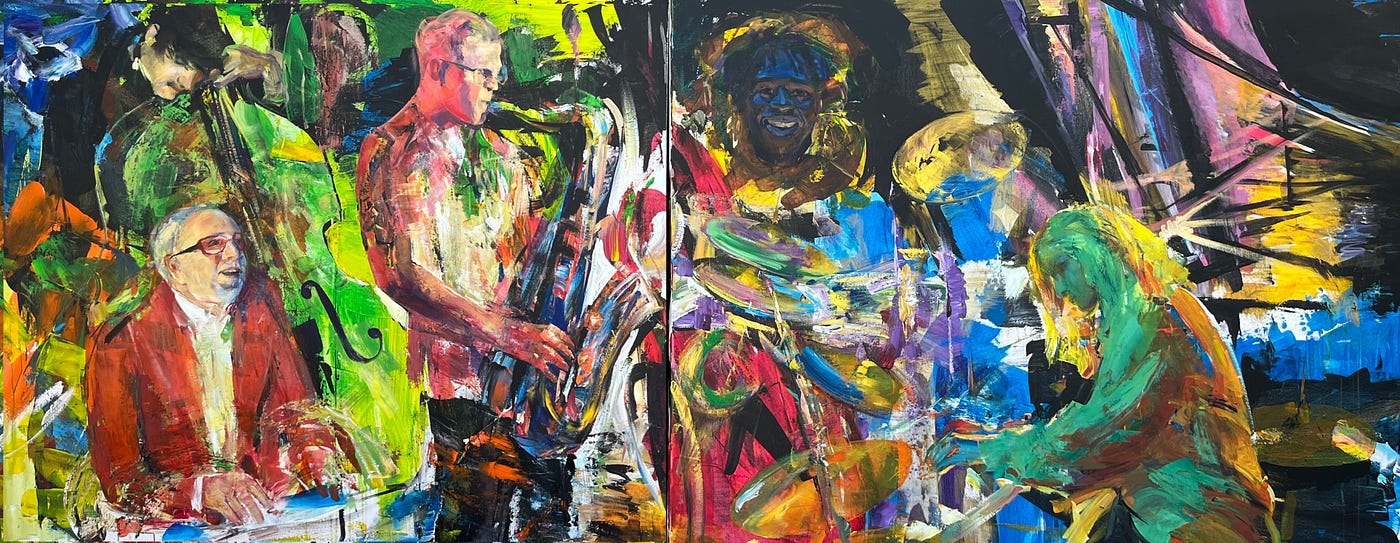
Jazzy from Natalia Aandewiel
Inspiration Through the Senses and the Emotional Landscape of Experience
People, nature, music, and lived moments form the heart of Aandewiel’s artistic inspiration. She is most drawn to genuine human connection, whether captured in a portrait, a musical performance, or a moment of collective celebration. Her synesthesia allows her to interpret sound and emotion as color and movement, giving her paintings a vivid and intuitive quality.
California’s landscapes and the memories of her homeland both shape her palette. The longing for Ukraine and the tenderness of remembering its beauty appear quietly in her compositions, while the light and rhythm of the California coast influence her current body of work. Each painting becomes a vessel for presence, shaped by her understanding of fragility and gratitude after surviving both war and illness.
Aandewiel aims to convey empathy, presence, and healing. She seeks to remind viewers of the strength of the human spirit and the importance of emotional expression. Whether she is capturing the joy of a wedding, the reverence of a tree, or the pulse of music, her work always reflects what is felt as much as what is seen.
Art as a Response to War, Displacement, and Global Uncertainty
Political events and personal challenges have shaped not only Aandewiel’s themes but also her understanding of why she paints. Having fled war in Ukraine and navigated her husband’s long-term cancer treatment, she has learned to live in the present and to value connection above all else. When stability disappears, her hands, her eye, and her capacity for emotion remain. Painting offers a sense of peace that allows her to process loss, rediscover beauty, and reclaim joy.
Her synesthesia deepens this relationship with art. Sound and emotion appear to her as shifting colors, and live painting sessions immerse her in sensory movement. During these moments, art grounds her, helping her remain present even when the world feels uncertain.
This understanding also guides her approach to teaching. She encourages students to use art not only as a way to depict what they see but also as a tool for processing emotion. Creativity becomes a way to transform fear into form, grief into beauty, and uncertainty into meaning.
Environmental change has also entered her work, especially through her time painting the California coast. She observes changes in light, waterlines, and atmospheric tension, which quietly influence her compositions. Nature reminds her of impermanence and continuity, lessons that echo through her practice.

Ecstatic Wave from Natalia Aandewiel
Displacement, Healing, and the Subjects That Guide Her Creative Vision
Displacement and the emotional impact of war form a central thread in Aandewiel’s artistic identity. She carries the experience of leaving her home, witnessing loss, and holding onto hope for her homeland. Even when her paintings are not overtly political, they resonate with vulnerability, resilience, and the desire to protect what is precious.
Emotional and mental health also hold a significant place in her work. Art helped her navigate cancer and continues to offer grounding during ongoing challenges. Through portraiture, landscapes, and live performance painting, she seeks to uplift, soothe, and connect.
Aandewiel also describes a prophetic quality in some of her paintings. She often creates a piece without fully understanding why, only to realize later that it reflected something about to unfold. Her intuition guides her hand, allowing her to explore truths that exist beyond logic. She believes this sensitivity is one of the profound powers of art.
Moments of presence and joy also inspire her deeply. Live music, movement, and celebration evoke a sense of vitality that she captures with immediacy on canvas. These moments affirm life’s complexity and beauty, and her work invites viewers to honor them.
Artistic Responsibility, Cultural Foundations, and Changing Audiences
Aandewiel believes that her art speaks from her roots. Even without knowing her background, those familiar with Eastern European art often recognize the influence of Ukrainian tradition in her work. Her boldness, symbolism, and expressive composition reflect the culture she comes from and the academic discipline she carries. She views this foundation as an integral part of her artistic voice.
Audience engagement with political and emotional themes has evolved in recent years. Aandewiel has encountered great empathy and solidarity, especially regarding the war in Ukraine, as many viewers seek connection through personal stories. However, she has also experienced hesitation and discomfort in some professional settings, where she was asked to avoid discussing her personal history. This tension reveals the complexities of creating art during times of global conflict.
Despite these challenges, she finds that vulnerability leads to meaningful connections. When viewers encounter a portrait or landscape that carries emotional truth, they often respond with depth and sincerity. Art reaches people in ways that transcend argument, allowing them to feel rather than react.
Sustainability, Health, and Intentional Creative Practice
Aandewiel’s artistic choices reflect both environmental awareness and personal responsibility. After developing cancer likely connected to exposure to solvents such as turpentine, she changed her entire method of working. She no longer uses thinners or chemical additives. Instead, she applies paint directly from the tube using palette knives, eliminating the need for toxic cleaning materials. This shift protects her health and reduces environmental harm, while also strengthening the physical immediacy of her technique.
Her studio practice is now clean, minimal, and focused on longevity. She extends this sense of responsibility to her public engagement, painting live at events where viewers can observe and connect with the creative process. Through teaching, she encourages others to use art as a way to process emotion and reclaim presence.
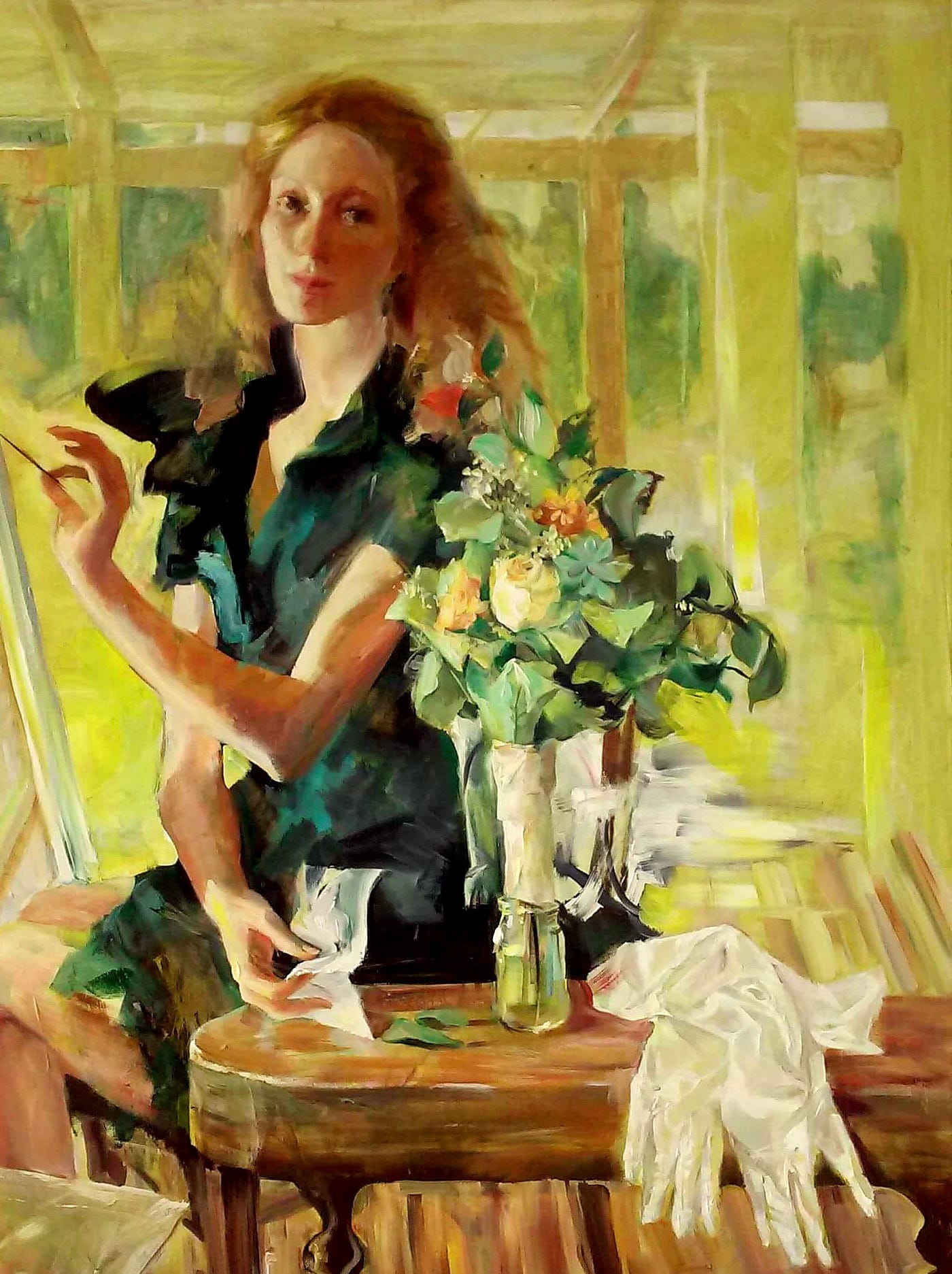
Self-Portrait from Natalia Aandewiel
Art as Bridge, Healing Practice, and Catalyst for Dialogue
Aandewiel sees her art as a bridge between people, cultures, and emotions. Because her practice emerges from personal experience, it carries an honesty that invites viewers into shared reflection. She believes art can open conversations that are compassionate rather than confrontational, and she strives to create environments where connection feels natural.
Painting live in public allows her to reach a wide range of people. Children approach her with awe, and adults respond with curiosity and openness. These interactions become meaningful points of dialogue. Her mentorship also extends this connection, guiding emerging artists toward confidence, courage, and expressive freedom. Some of her students have become successful artists themselves, crediting her influence. She views their growth with pride and gratitude.
For Aandewiel, painting is where she feels most present and authentic. It brings peace, grounding, and purpose. Through color, movement, and story, she reminds viewers that creativity is a powerful tool for healing and connection, especially in times of uncertainty.