
Subtotal
$0.00

The origins of an inner language
Born in Elbasan, Albania, Kristian Zara’s story begins within the echoes of silence left by political persecution. Growing up bilingual—in Albanian and Vlach—and within a family marked by historical trauma, he learned early how memory can shape identity. These layered inheritances became the ground of his multidisciplinary practice, spanning drawing, sculpture, and installation. Educated in Athens and Scotland after formative training at Elbasan’s Artistic High School Onufri, Zara developed an artistic vocabulary where material and spirit intertwine.
His work bridges philosophy and form. Each piece becomes an act of alchemy—transforming lived and inherited experiences into poetic matter. Drawing from Jung, Eliade, and Steiner, he explores archetypes and psychic transformation through tactile mediums such as wool, limestone, clay, and pigment. Zara’s practice is not about representation but transmutation: the attempt to turn the invisible movements of the mind into tangible presence.

The Present Past from Kristian Zara
From inherited trauma to creative awakening
For Zara, creation is inseparable from introspection. He was raised amid unspoken histories, where the aftermath of dictatorship lingered like a collective shadow. Art became a way to break that silence. “I work through what was handed down,” he says, “the weight of stories that were never told.” Each stroke, each mark on stone or paper, is a conversation with his ancestors—a way to give form to memory without turning it into propaganda or lament.
His installation, The Present Past (2024), set in the former political prison of Spaç, embodied this dialogue. Working within the haunted architecture of the site, he created a space where memory could breathe again. Visitors walked through shadows and fragments, encountering traces of voices once erased. Around three hundred young people visited the installation—many learning for the first time about the political persecutions that shaped their country. For Zara, this encounter confirmed that art can resurrect connection where history has fractured it.
Persona, society, and the search for authenticity
Zara’s current project, Self in Flux, turns inward to examine how modern life obscures authentic identity. Exploring the “persona as dominion,” he interrogates how social masks and digital performance distance us from our inner selves. The project, supported by the SCF fund, combines sculptural forms with psychological research, inviting viewers to reflect on their own fragmented selves.
For Zara, the artist’s role is not to moralize but to mirror. “Artists must serve truth,” he insists, “and condemn propaganda.” In his view, art has become too attached to popularity and spectacle. He believes true art is born of humility and the desire to understand — the kind of understanding that requires silence as much as speech.
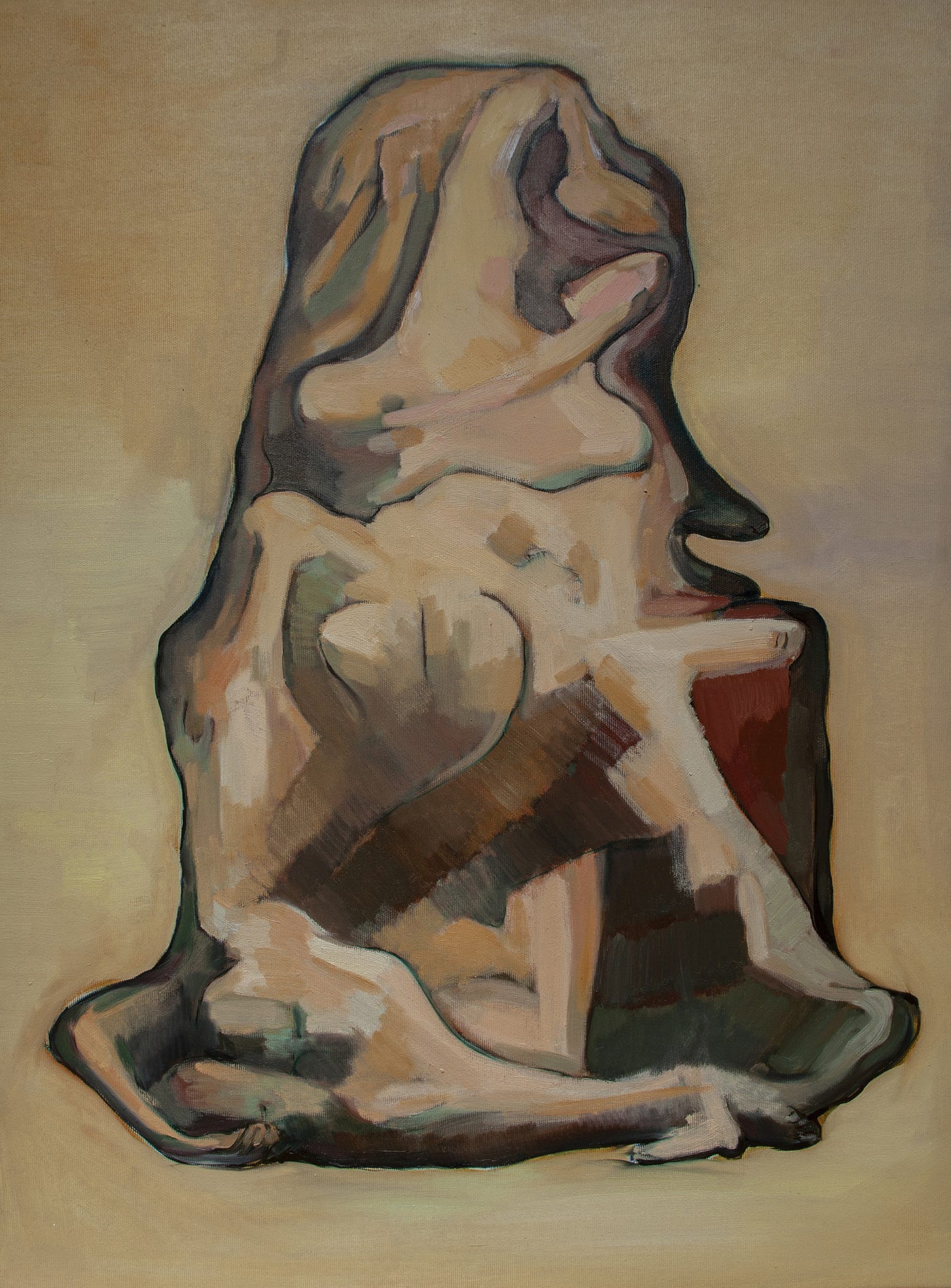
Formation by Kristian Zara
Art as reflection and transformation
Zara considers artistic creation a form of philosophical action. Each work, he says, is a site where the self meets the world in a “sacred dialogue.” This dialogue is not verbal but material—shaped through gesture, texture, and ritual. He often compares his studio to a laboratory of transformation, where chaos slowly organizes itself into meaning. In his view, art is not a final statement but an invocation — an opening through which the unseen becomes visible.
This approach is deeply Jungian, concerned with the integration of shadow and light. Zara’s work invites viewers to encounter their own inner symbols, to interpret rather than consume. His installations are thus not passive objects but experiences that unfold in the presence of the audience—each participant becoming part of the alchemy of meaning.
Confronting instability and institutional distance
Having worked across Albania and Europe, Zara has witnessed firsthand how political instability and bureaucratic distance affect artists. Funding bodies, he argues, often misunderstand art’s essence, demanding technical language that flattens imagination. “The artist’s language is visual,” he notes, “otherwise we would be writers or administrators.” He believes art should be treated as a vital profession, not a privilege or hobby. If society valued artists like teachers or doctors, he says, “creation would not have to compete with survival.”
Yet he remains hopeful. For him, art’s power lies in its capacity to shift perception—to restore the space for reflection that politics and consumerism erode. His faith in art as a transformative force is both personal and political: a belief that truth and beauty still have the power to heal.
Materials of meaning and sustainability
Although Zara rejects the moralization of “eco-purity,” he engages with sustainability through careful material choice. His studio is a space of mindful production, where resources are used with respect and waste is minimized. He works primarily with limestone, ink, oil colors, pencil, clay, and wood—materials that carry both symbolic and earthly resonance. He sees in their textures a record of time and decay, a metaphor for the fragility of existence.
His awareness of environmental impact is introspective rather than didactic. He knows that creation inevitably leaves a trace, and that acknowledging this is the first step toward responsibility. For Zara, sustainability is as much about inner ethics as material practice — a form of respect for the living world as well as the spiritual one.
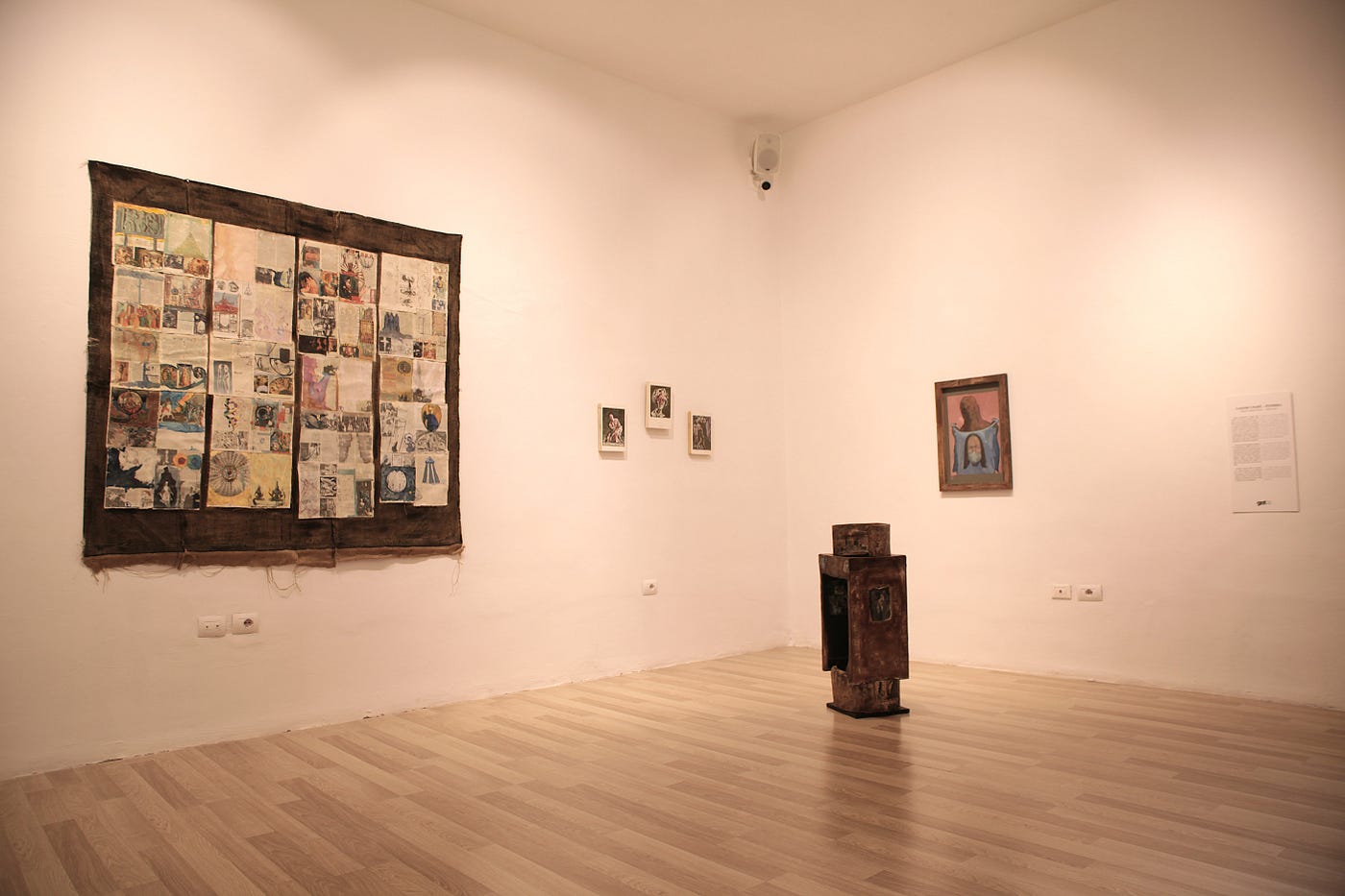
Inward from Kristian Zara
Awakening through art and psyche
Zara believes art can reshape society by awakening individual consciousness. His works encourage people to look inward, to face their own disquiet and contradictions. In an era dominated by image and self-projection, he seeks to redirect attention toward authentic encounter. “The artist,” he says, “must help others see their inner worlds, because that is where change begins.”
Through symbolic language and material poetry, Zara encourages collective introspection. His art is not merely about aesthetics but about participation—the viewer is asked to listen to their own responses, to transform perception into understanding.
Closure on sincerity and becoming
For Kristian Zara, art is not a career but a way of being. He rejects the idea that success is measured in visibility or market value. Instead, he calls on artists to “create as a matter of heart, not status.” He believes that true artistic practice requires courage—the courage to be honest, to remain curious, and to pursue truth even when it makes life harder.
In his philosophical statement, Zara describes creativity as “allowing being and becoming to intertwine—to cohere chaos into form.” This idea permeates his life and work alike. For him, each piece is not a final product but a threshold—an invitation to transform through awareness. His art reminds us that the truest revolutions begin quietly: within the individual soul willing to see, feel, and change.