
Subtotal
$0.00
Digital art was once mainly experienced through a screen. Viewers opened a website, watched a video, explored an online gallery, or viewed an image on a phone. The digital space acted as the destination.
That relationship is changing.
Augmented reality, virtual reality, projection, motion tracking, spatial sound, and interactive technology are allowing digital artwork to enter museums, parks, streets, homes, and public spaces. Instead of remaining separate from the physical world, digital art can now respond to architecture, movement, location, and the presence of an audience.
A sculpture may appear through a phone camera in the center of a public plaza. A museum visitor may rotate a historical object in augmented reality. An immersive installation may cover an entire room with moving images and sound. A virtual exhibition may allow someone across the world to move through a cultural space without physically traveling there.
These experiences are changing more than the tools artists use. They are expanding the meaning of an exhibition, reconsidering where art can exist, and inviting audiences to participate in ways that traditional viewing does not always allow.
When digital art enters the real world, the boundary between artwork, viewer, and environment becomes less fixed.
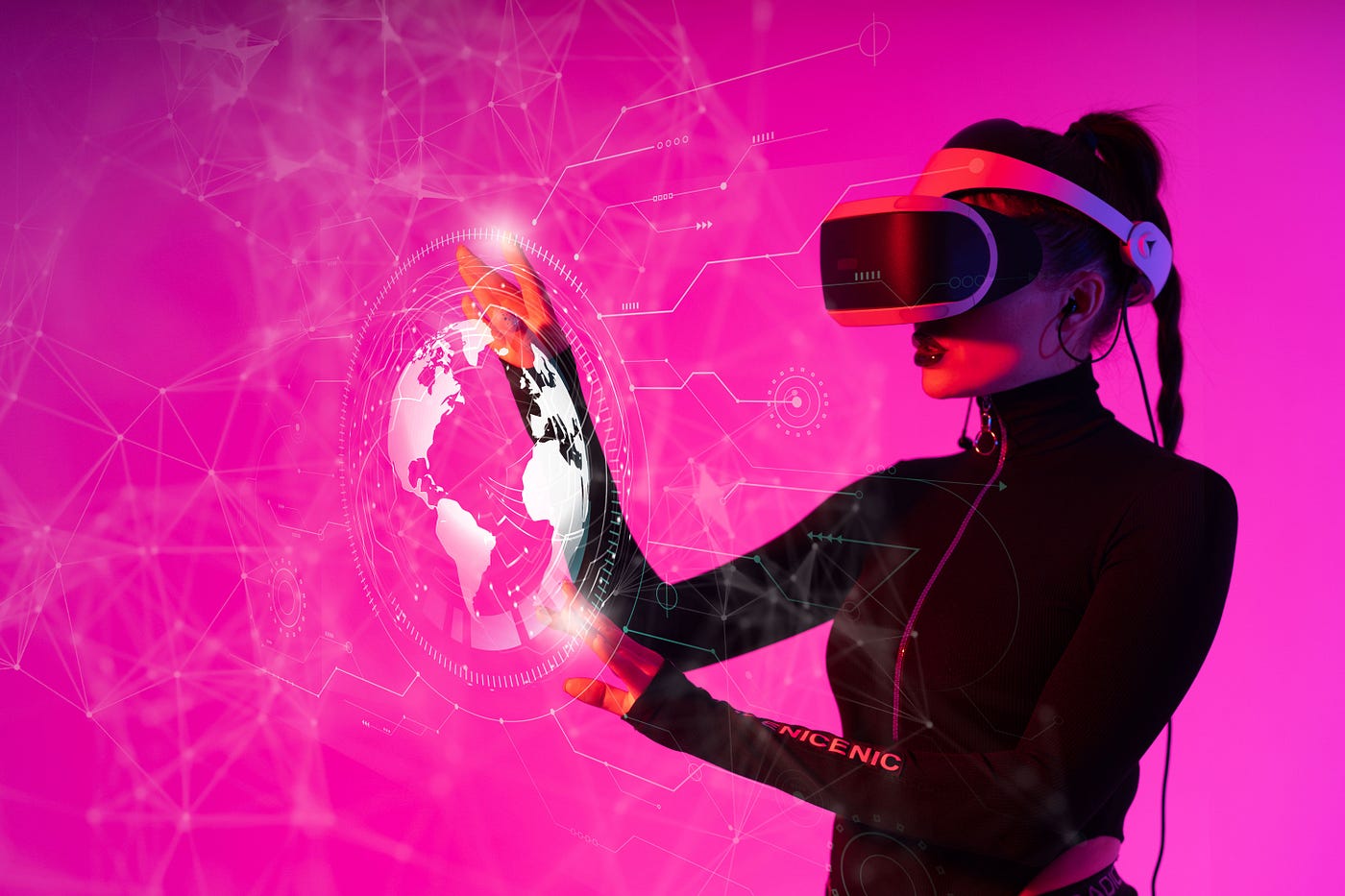
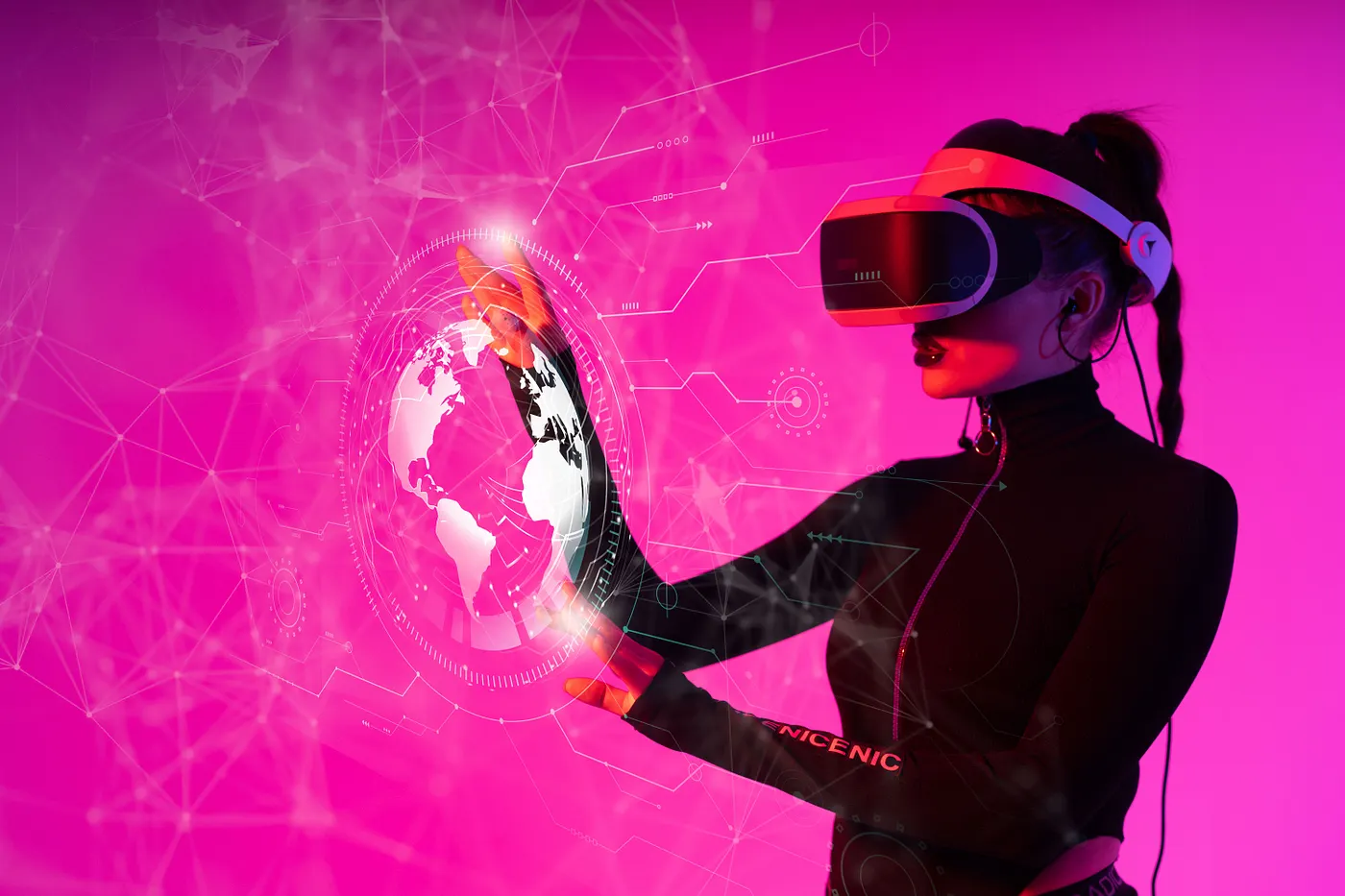
A woman interacts with a VR hologram in a futuristic studio setting. Image by Atlantic Ambience
What Does It Mean for Digital Art to Enter Physical Space?
Digital art entering physical space can take several forms. Augmented reality adds digital images, objects, or information to a viewer’s surroundings through a phone, tablet, headset, or similar device. Virtual reality places the viewer inside a fully created digital environment. Projection and immersive media transform physical surfaces using moving images, light, and sound.
Mixed reality combines parts of these experiences. Digital elements may appear to recognize furniture, walls, people, or architectural features and respond to them in real time.
The technology may be complex, but the artistic idea is straightforward: the artwork is no longer limited to a flat image or a permanent object.
A digital piece can change according to time, weather, location, movement, sound, or audience participation. It can exist temporarily in one place and later appear somewhere else. It can be viewed publicly or experienced privately.
This flexibility allows artists to work with space in new ways. The environment is not simply a background for the art. It can become part of the art itself.
Augmented Reality Can Turn Any Place Into an Exhibition
Augmented reality allows artists and institutions to place digital content in locations where physical installation may be difficult, expensive, or impossible.
A public park can hold a virtual sculpture without permanent construction. A historic site can display lost architecture or objects connected to its past. A gallery can add digital layers to an existing exhibition. A collector can preview an artwork in a home before deciding how it fits the space.
Because the digital object does not always require a physical structure, AR can also support experimentation. Artists can create work at a scale that might otherwise be unrealistic. A virtual sculpture can rise above a building, move through a landscape, or change as the viewer walks around it.
Tate’s Landscapes Reimagined project, developed with the Shanghai Museum and Factory 42, used augmented reality to let audiences explore, interact with, and create art connected to landscape traditions. Tate has also presented the KEMENETH augmented-reality experience, which connected immersive digital work to the physical landscape of St. Ives. These projects show how AR can extend an artistic experience beyond a conventional gallery display. (Tate)
The location still matters. A virtual object viewed in a public square creates a different experience from the same object viewed in a bedroom. The surrounding architecture, history, noise, weather, and movement all influence how the work is understood.
AR does not necessarily remove art from place. It can make the relationship between art and place more noticeable.
Museums Are Making Collections More Interactive
Museums have traditionally asked visitors to look carefully while maintaining physical distance from artworks and historical objects. Digital tools can create additional forms of access without replacing the original object.
A visitor may use AR to view the back of a sculpture, enlarge a small detail, examine an object from different angles, or understand how it may have appeared in another setting. These experiences can be especially useful when an artwork is fragile, difficult to move, or only partially visible in a display case.
In February 2026, the Metropolitan Museum of Art announced that it was publishing more than 100 high-resolution 3D models from across its collection. The models can be rotated and examined online, while many can also be placed into a viewer’s surroundings through augmented reality using smartphones and VR headsets. A majority were also made available through the museum’s Open Access program. (The Metropolitan Museum of Art)
This approach changes the relationship between collection and audience. A museum object can still retain its physical importance while becoming available for closer study, education, experimentation, and creative reuse.
Digital access can also help people who cannot travel to the museum. Students, researchers, artists, and general audiences can explore objects from different locations and devices.
The physical museum remains meaningful, but the collection no longer ends at the museum door.
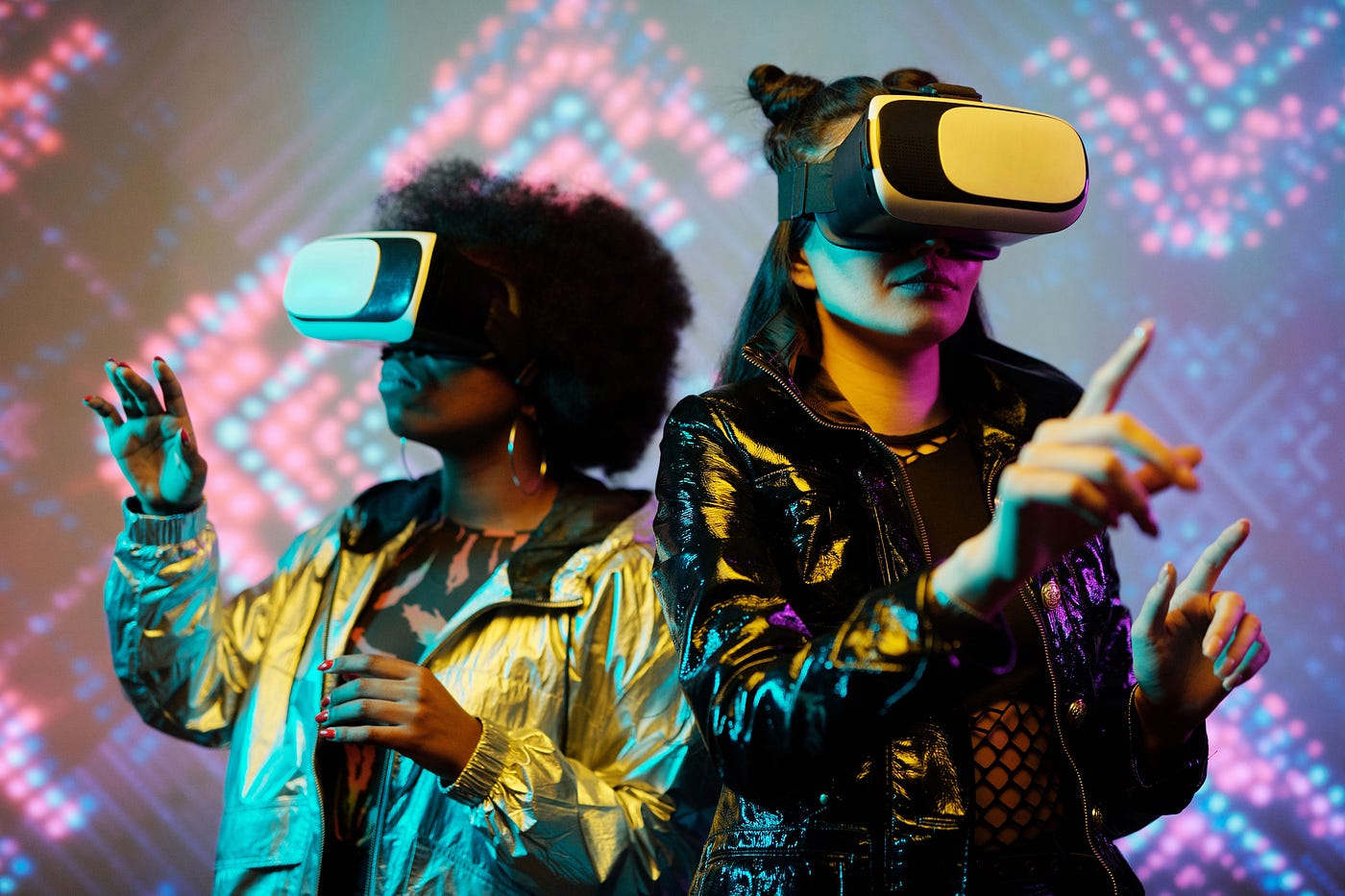
Two young women immersed in a futuristic virtual reality experience, showcasing vibrant technology. Image by Darlene Alderson
Virtual Reality Can Create New Forms of Storytelling
Virtual reality does more than reproduce a gallery online. It can reorganize scale, movement, sequence, and atmosphere in ways that would be difficult in a physical exhibition.
A viewer can enter a reconstructed site, approach an object at eye level, hear layered stories, move through historical environments, or interact with elements that respond to their choices.
In 2025, the Met launched two immersive VR and web experiences focused on the Temple of Dendur and works from its Oceanic art collection. The projects combined 3D scans, sound, archival material, storytelling, movement, and interactive activities. They were designed to be experienced through a web browser or personal VR headset, allowing audiences outside New York to explore the works remotely. (The Metropolitan Museum of Art)
This kind of experience is not identical to standing in front of an original object. It offers something different.
The physical museum gives viewers contact with material, scale, age, and presence. A virtual environment can provide reconstruction, context, narrative, and interaction. The two forms can support one another rather than compete.
For artists, VR also opens possibilities beyond museum interpretation. An artwork can become an environment rather than a single object. The artist can shape where the viewer moves, what they hear, how long they remain, and what changes when they interact with the space.
The audience becomes more active, and movement becomes part of the viewing process.
Immersive Installations Transform Architecture
Not every digital exhibition requires a headset or personal device. Large-scale projections, responsive screens, sound systems, sensors, and data visualization can transform entire rooms and buildings.
In these experiences, architecture becomes a surface for the artwork. Walls, ceilings, floors, and passageways may carry moving images. Sound can guide viewers through the space. Sensors may cause the work to respond when someone approaches.
The audience is surrounded rather than positioned in front of a single object.
Refik Anadol’s Echoes of the Earth: Living Archive at Serpentine North used data connected to coral reefs and rainforests to create immersive digital environments. The installation wrapped gallery walls in generated imagery informed by data gathered through methods including LiDAR and photogrammetry, combining art, science, technology, sound, and large-scale visual experience. (Serpentine Galleries)
Immersive digital art can create a strong emotional response because it changes the viewer’s entire field of attention. The audience may feel inside the artwork rather than outside it.
However, scale alone does not create meaning. The strongest immersive installations use technology in service of an artistic idea. Projection, sound, and data are most effective when they help audiences understand a subject, emotion, place, or question more deeply.
The Audience Is Becoming Part of the Artwork
Traditional artworks can be interactive in an emotional or intellectual sense, but many digital installations respond directly to the audience’s physical presence.
A sensor may track movement. A projected image may shift when someone enters a room. Sound may change according to the number of visitors. A digital sculpture may only appear when viewed from a certain location.
This creates a different relationship between artist and audience. The artist designs the system and its possibilities, but the viewer helps determine the final experience.
No two visits may be exactly the same.
Participation can make art feel more approachable, particularly for audiences who may feel unsure about how to engage with contemporary work. Instead of asking whether they understand the artwork correctly, they can begin by exploring how it responds.
Interactive work can also encourage shared experience. Visitors may watch how others affect the installation, collaborate to trigger changes, or document the experience through photographs and video.
The artwork becomes an event as well as an object.
Public Art Can Become Temporary and Changeable
Physical public art often requires long planning processes, durable materials, engineering, maintenance, and permanent access to space. Digital public art can operate differently.
An AR installation may appear for one event, one neighborhood, or one period of time. A projection can transform a building for a night. A digital artwork can change during a festival or respond to live information.
This temporary quality can be useful. Artists can address a current event or local story without creating a permanent structure. Communities can test creative ideas before committing to long-term installations. Several artists may use the same location at different times.
Digital public art can also reveal spaces that are often overlooked. A vacant lot, transit station, sidewalk, or building exterior can become part of an artistic experience.
However, digital access creates its own questions. Does the viewer need a particular phone, app, headset, or internet connection? Is the experience understandable without technical instructions? Can people with disabilities participate? Does the artwork collect location or movement data?
A public artwork is only truly public when audiences can reasonably access it. Technology should expand participation rather than create a new barrier.
Digital Art Still Depends on Place
It can be tempting to describe digital art as existing everywhere and nowhere. A file can travel instantly, and a virtual object may be placed in many locations. Yet physical context continues to affect meaning.
An AR work placed near a historical monument may challenge the monument’s story. A projection on a government building carries a different meaning from the same projection in a private gallery. A digital installation in a forest changes how viewers understand both technology and nature.
The place gives the artwork social, cultural, architectural, and political context.
Artists working with digital public space must therefore think like both media artists and placemakers. They need to consider who uses the site, what the location represents, how people move through it, and whether the work supports or disrupts the surrounding environment.
Digital work may be technically portable, but meaningful placement is rarely interchangeable.
What These Technologies Offer Artists
Augmented reality and immersive media expand the range of projects artists can create. A painter may add a digital layer to a physical canvas. A sculptor may design virtual forms that would be impossible to fabricate. A photographer may build an environment viewers can enter. A public artist may create location-based work across several neighborhoods.
These tools also create opportunities for collaboration. Artists may work with programmers, sound designers, architects, researchers, curators, animators, filmmakers, and community organizations.
The result can combine several disciplines without fitting neatly into one category.
Artists do not need to abandon physical materials to work digitally. Hybrid practices can be especially compelling because they allow tangible and virtual elements to strengthen one another.
A ceramic object might activate an AR animation. A mural may contain a digital layer visible through a phone. A textile installation could change through projection and sound.
The central question is not whether the work is physical or digital. It is whether the chosen medium supports the artist’s idea.
New Technology Also Creates New Challenges
Digital art can feel immediate, but it is not always easy to preserve. Software changes, devices become outdated, applications disappear, and file formats may no longer function.
A physical painting can age, but it usually remains visible. A digital artwork may depend on a specific operating system, platform, server, sensor, or piece of hardware.
Artists and institutions must consider documentation and preservation from the beginning. They may need to save source files, record installation instructions, list required equipment, and explain what aspects of the experience can change without altering the work.
Ownership can also become complicated. A collector may purchase a digital file, a license, a physical component, or the right to present the work under certain conditions. These details should be explained clearly.
Accessibility is another concern. Motion-heavy visuals may affect some viewers. Headsets may not be comfortable or usable for everyone. Audio experiences should include captions or visual alternatives when possible.
Innovation is most meaningful when it is paired with thoughtful design.
Digital Discovery Requires Clear Language
Digital artwork may be visually complex, but audiences still need clear written information to find and understand it online.
An artwork page should explain what type of experience it offers, what technology it uses, where it can be viewed, what devices are required, and what ideas shape the work.
Calling something simply “digital art” may be too broad. A stronger description could identify it as a location-based augmented-reality sculpture, an interactive projection installation, a browser-based virtual exhibition, or a mixed-reality public artwork.
This clarity supports both SEO and GEO.
Someone may ask a search engine or AI platform:
- What is augmented-reality art?
- Where can I experience immersive art?
- How are museums using virtual reality?
- Can digital art exist in public space?
- What is the difference between AR and VR art?
- Which artists create interactive installations?
Artists and platforms that answer these questions directly have a stronger chance of becoming part of search results and AI-generated recommendations.
Images and video can show the experience, but written context helps digital systems interpret it accurately.
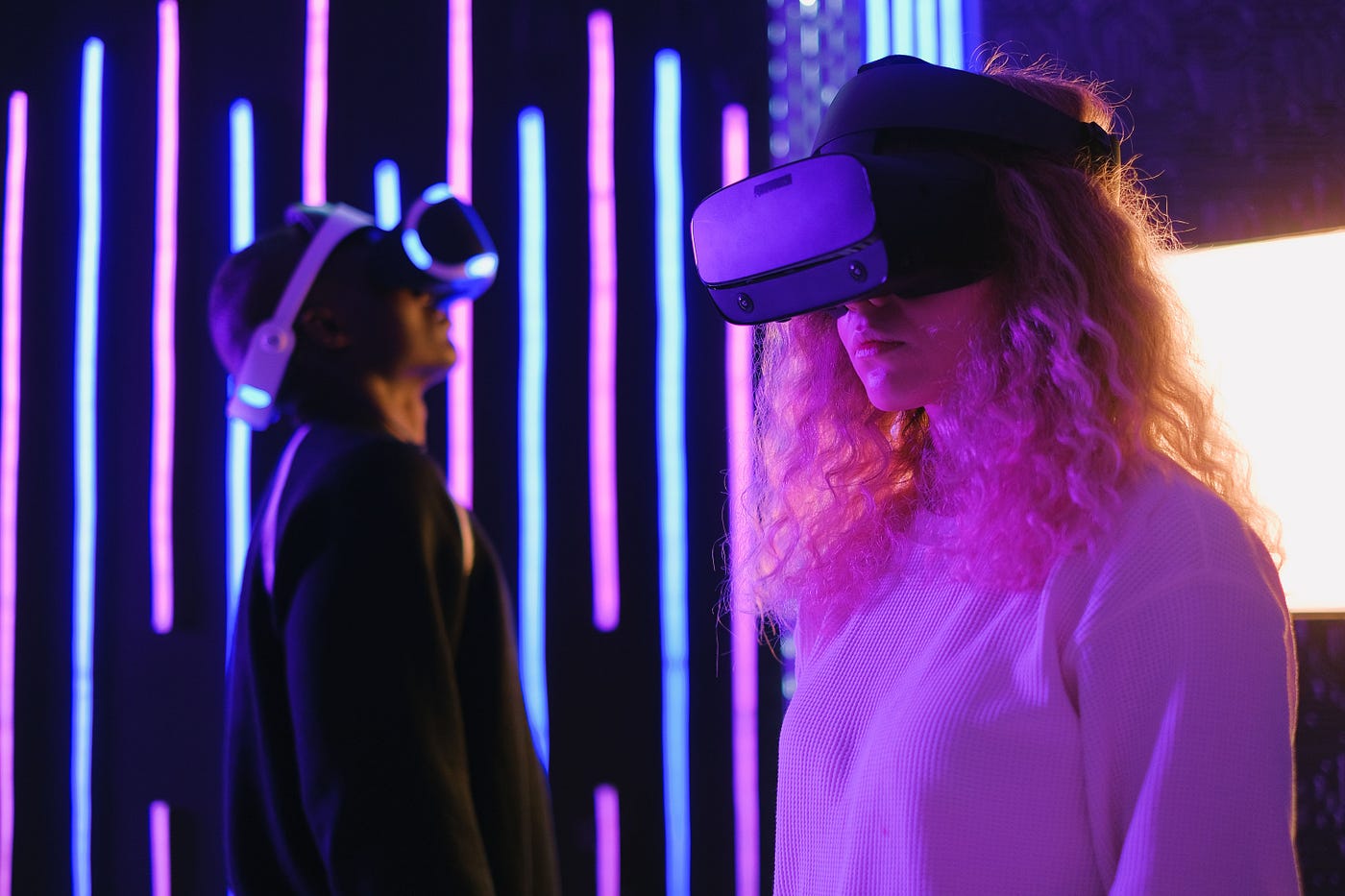
Two young adults engaged in a virtual reality experience with VR headsets in a neon-lit environment. Image by SHVETS Production
How RevArt Can Connect Artists With Digital Opportunities
RevArt can help artists working with emerging technology present their work in a way that feels clear, professional, and accessible.
Artist profiles can explain the tools, creative process, subject, audience experience, and technical requirements behind digital projects. Video, installation views, screenshots, and written descriptions can help audiences understand work that may be difficult to represent through one still image.
RevArt can also connect digital artists with opportunities beyond traditional galleries. Hotels, public spaces, cultural organizations, real estate projects, festivals, brands, and community partners may all be interested in interactive or immersive experiences.
For collectors and partners, RevArt can help explain what it means to commission, license, display, or maintain digital artwork.
Educational content can answer practical questions about equipment, installation, ownership, preservation, audience accessibility, and collaboration.
This allows RevArt to become not only a place where digital art is displayed, but also a bridge between artists and the people who want to bring digital experiences into physical environments.
Art Is Expanding Beyond the Screen
Digital art entering the real world does not signal the end of painting, sculpture, photography, or other physical practices. It expands the range of ways artists can create and audiences can participate.
A digital installation can surround a viewer. An AR object can change the meaning of a public place. A virtual exhibition can bring a collection to someone who cannot visit in person. A responsive artwork can make the audience part of the final experience.
The most important change is not the technology itself. It is the new relationship the technology creates between artwork, audience, and environment.
Digital art becomes more powerful when it does not use innovation only for spectacle. It becomes powerful when the technology helps viewers notice something, understand something, or experience a familiar place differently.
As artists continue working across screens, buildings, streets, museums, and virtual environments, the distinction between digital and physical art may become less important.
What will matter is the experience—and the meaning audiences carry with them after they leave.
Ready to explore how contemporary artists are reshaping the relationship between technology, place, and audience? Follow RevArt for artist stories, digital art insights, public art trends, and new creative opportunities.